“Foremost among the eight cuisines, a source of imperial cooking”
Foremost among the eight cuisines and a source of imperial cooking. Savory freshness leads, supported by precise heat control and knife skills. Scallion braising, ba-style braising and flash-frying are signature strengths.
Flash-fryingBa-style braisingSauce-braisingDeep-fryingSteamingStir-fryingPan-frying followed by braising
Essential ingredients
Zhangqiu scallions
Sweet bean sauce
Soybean paste
Master stock
Sichuan peppercorns
Star anise
Signature dishes
Discover 6 classics. Mark dishes you have tried; your checklist stays in this browser.
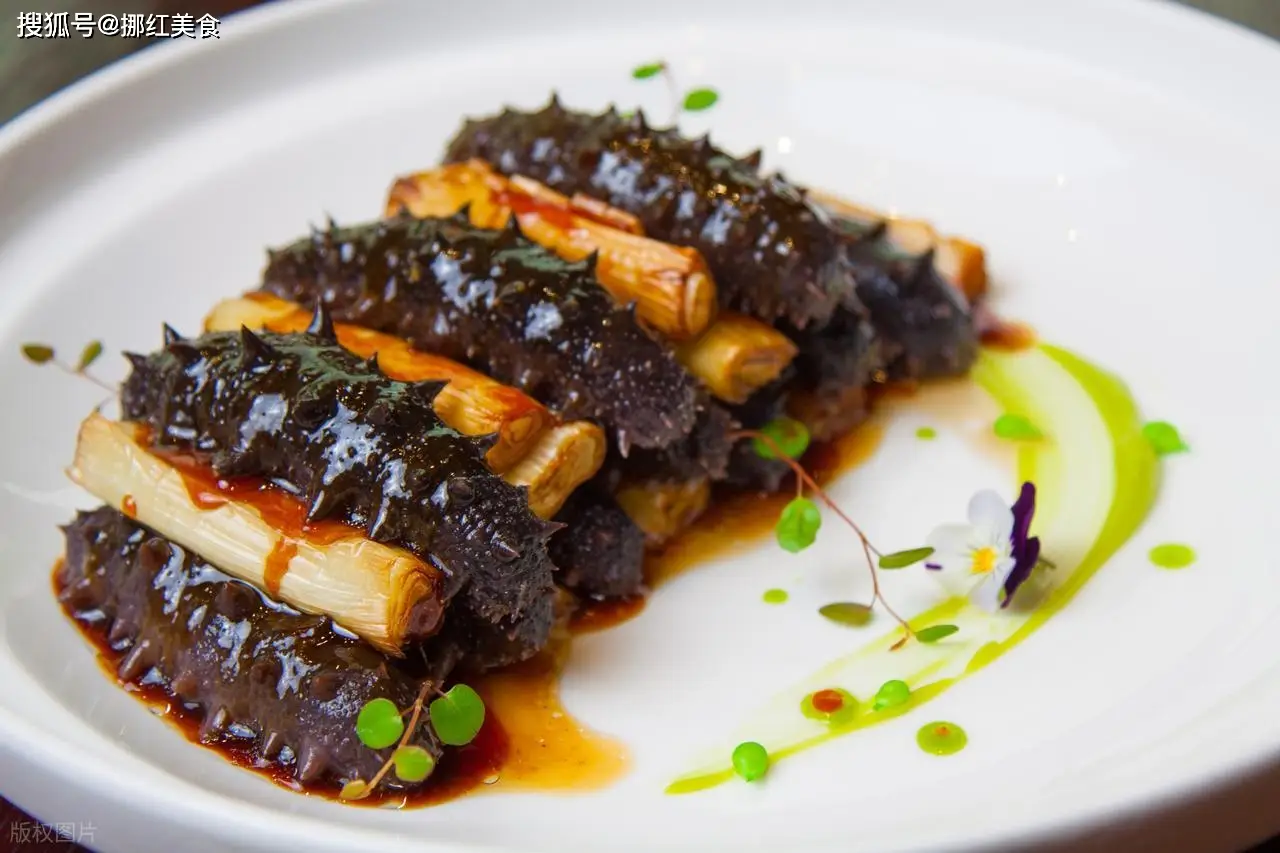
Sea Cucumber Braised with Scallions
Advanced90 minutes
A premier Shandong banquet dish. Liaoning sea cucumber is gently cooked in rich stock, scallion sections are fried until golden, then both are braised until the sauce thickens. Soft yet springy sea cucumber and deep scallion fragrance express Shandong’s mastery of seasoning with scallions.View description ↓Hide description ↑
A premier Shandong banquet dish. Liaoning sea cucumber is gently cooked in rich stock, scallion sections are fried until golden, then both are braised until the sauce thickens. Soft yet springy sea cucumber and deep scallion fragrance express Shandong’s mastery of seasoning with scallions.
A representative of Shandong’s mountain-and-sea delicacies. Zhangqiu scallions are its soul: their white stems can reach half a meter and taste sweet rather than pungent. Scallion and sea cucumber, vegetable and animal, land and sea together express the generous spirit of Shandong.
Nine-Turn Braised Pork Intestines
Advanced120 minutes
Pork large intestines undergo four stages—blanching, boiling, frying and braising—with more than ten spices, including amomum, cinnamon and cardamom. Sour, sweet, bitter, spicy and salty flavors all appear. The finished dish is glossy red, soft and yielding, with a lingering finish.View description ↓Hide description ↑
Pork large intestines undergo four stages—blanching, boiling, frying and braising—with more than ten spices, including amomum, cinnamon and cardamom. Sour, sweet, bitter, spicy and salty flavors all appear. The finished dish is glossy red, soft and yielding, with a lingering finish.
First created at Jinan’s Jiuhualou during the Guangxu reign of the Qing dynasty. Its elaborate process was compared to the “nine turns” of Daoist alchemy. Diners praised the flavor as if it were a nine-turn elixir, giving the dish its name.
Sweet-and-Sour Carp
Moderate30 minutes
Yellow River carp is scored with peony-shaped cuts, battered and fried so its head and tail rise as if leaping through the Dragon Gate. A clear golden sweet-and-sour sauce coats the crisp exterior and tender flesh, sizzling as it reaches the table.View description ↓Hide description ↑
Yellow River carp is scored with peony-shaped cuts, battered and fried so its head and tail rise as if leaping through the Dragon Gate. A clear golden sweet-and-sour sauce coats the crisp exterior and tender flesh, sizzling as it reaches the table.
A classic Shandong treatment of Yellow River carp. Jinan stands beside the river, whose carp have rich, plump flesh. Shaped like a carp leaping through the Dragon Gate, the dish is an essential auspicious centerpiece at Shandong banquets.
Dezhou Braised Chicken
Advanced360 minutes
A whole chicken is marinated with sixteen spices, colored with honey, fried in vegetable oil and braised in master stock for six hours. Its bones soften and the meat becomes so tender that a gentle shake separates them. Fragrant with spices, it is enjoyed hot or cold.View description ↓Hide description ↑
A whole chicken is marinated with sixteen spices, colored with honey, fried in vegetable oil and braised in master stock for six hours. Its bones soften and the meat becomes so tender that a gentle shake separates them. Fragrant with spices, it is enjoyed hot or cold.
Created during the Kangxi reign of the Qing dynasty, Dezhou braised chicken has more than three hundred years of history. After the Tianjin–Pukou Railway opened in 1912, it became famous along the rail network. A chicken and a flask of aged wine were a luxurious travel meal in the era of green passenger trains.
Flash-Fried Double Crisp
Advanced10 minutes
The tips of pork stomach and chicken gizzards are scored, then flash-fried in hot oil for just seven or eight seconds, with sauce clinging to each piece. The stomach is white and crisp, the gizzards tender and springy: an exacting test of heat control.View description ↓Hide description ↑
The tips of pork stomach and chicken gizzards are scored, then flash-fried in hot oil for just seven or eight seconds, with sauce clinging to each piece. The stomach is white and crisp, the gizzards tender and springy: an exacting test of heat control.
A pinnacle of Shandong flash-frying. A second too long makes it tough; a second too short leaves it raw. A perfect plate spends no more than ten seconds in the wok. “Taking treasure from the fire” is the most apt description.
Cattail Shoots in Milky Broth
Moderate60 minutes
Tender cattail shoots from Daming Lake are gently simmered with ham, shiitake mushrooms and dried bamboo-shoot slices in a milky-white stock. The broth looks like milk, while the shoots remain crisp, tender and sweet: a representative Shandong soup dish.View description ↓Hide description ↑
Tender cattail shoots from Daming Lake are gently simmered with ham, shiitake mushrooms and dried bamboo-shoot slices in a milky-white stock. The broth looks like milk, while the shoots remain crisp, tender and sweet: a representative Shandong soup dish.
Cattail shoots are a specialty of Jinan’s Daming Lake and are especially tender between spring and summer. The milky broth comes from long-simmered mature hen, pork bones and duck carcasses, demonstrating Shandong’s mastery of stock.
History and stories
Origins and evolution
Shandong is described as the oldest and most influential of China’s eight great cuisines, honored as “foremost among the eight.” Cooking was already highly developed in the state of Qi during the Spring and Autumn and Warring States periods. Confucius’s ideal of finely prepared food and finely cut meat profoundly shaped its standards. During the Ming and Qing, many Shandong chefs entered the imperial kitchens, establishing it as a leading Chinese culinary tradition. Shandong dishes formed the framework of the Manchu-Han banquet. Its influence extends beyond the province: Beijing, Tianjin, northeastern China and the broader northern Chinese cooking traditions can all trace roots to Shandong.
Shandong cuisine stands at the source of Chinese culinary civilization. In the Spring and Autumn and Warring States periods, the bustling Qi capital of Linzi was said to be so crowded that raised sleeves formed an awning and shaken sweat fell like rain. Its food culture was already highly developed. Texts such as the Zuo Commentary and Guanzi describe aristocratic banquets in Qi and Lu in detail. Confucius’s insistence on refined food and finely cut meat—refusing improperly cut meat or food served with the wrong sauce—helped establish a philosophy of Chinese dining and remained a standard for Shandong cooks for two thousand years. Jia Sixie’s Essential Techniques for the Common People, written in the Northern Wei, records dozens of local cooking methods. Eight of them—steaming, boiling, roasting, stuffing, stir-frying, pan-frying, deep-frying and pickling—remain central skills. During the Ming and Qing, many chefs from Fushan, now Yantai’s Fushan District, entered the imperial kitchens, giving Shandong cuisine an official place at court. It provided the framework for the Manchu-Han banquet. Its later influence was extensive: Beijing roast duck and quick-cooked tripe, Tianjin jianbing guozi and the Eight Great Bowls, and even northeastern sweet-and-sour crispy pork can be traced to its cooking system. Its title as “foremost among the eight cuisines” is presented as well earned.
The Qing dynasty’s Manchu-Han banquet marked a peak of Chinese banquet culture, with more than a hundred dishes in the full feast. Interestingly, its main cooks were described not as Manchu or Han court chefs, but as Shandong specialists. Fushan, now part of Yantai, has long produced chefs. Incomplete records suggest that more than thirty percent of documented imperial cooks in the Ming and Qing came from Fushan. “If you want to eat well, stay around Fushan”: this centuries-old saying reflects Shandong cuisine’s central place in Chinese food culture.
A philosophy of food
Food should be refined; meat should be finely cut. Confucius’s dining ideals from two thousand years ago still animate Shandong cooking: carefully chosen ingredients, precise knife work, exact heat and pure seasoning. Its cooks seek to draw flavor out rather than manufacture it. The ingredient’s own taste is the finest taste.
People behind the tradition
Cui Yiqing
Republican era to the present
Honored as a leading elder of Shandong cuisine and a master of Jinan cooking. He led the kitchens of established restaurants such as Yanxitang and Jufengde for decades, mastering classics including flash-fried double crisp and nine-turn braised intestines. He wrote several textbooks and trained students far and wide, becoming a central figure in the modern transmission of Shandong cuisine.
Wang Yijun
Contemporary
A renowned chef of Beijing’s Fengzeyuan and a master of state-banquet cooking. His scallion-braised sea cucumber was praised as “the finest under heaven.” Through state banquets for leaders from around the world, he demonstrated Shandong cooking at its highest level and helped bring it international recognition.
Yan Jingxiang
Contemporary
A Chinese master chef and Shandong culinary theorist. He wrote authoritative works including Chinese Shandong Cuisine, systematically examining its origins, techniques and cultural meaning. He made pioneering contributions to its scholarly study and standardization.
Through the seasons
Spring
Chinese Toon Shoots with Tofu
Around the Grain Rain solar term, tender reddish-purple Chinese toon shoots are blanched, finely chopped and mixed with soft tofu. Fresh green against white makes it Shandong’s first cold dish welcoming spring.
Summer
Cattail Shoots in Milky Broth
Daming Lake’s cattail shoots are especially tender in summer. Gently simmered in milky-white stock, they remain crisp and sweet, making this one of Jinan’s most elegant midsummer soups.
Autumn
Sea Cucumber Braised with Scallions
In autumn, sea cucumbers are thick and plump and Zhangqiu scallion whites are sweet and crisp. Braising them together until the sauce thickens yields soft sea cucumber and rich scallion aroma: a prized Shandong dish for traditional autumn nourishment.
Winter
Dezhou Braised Chicken
In the cold twelfth lunar month, a chicken braised for six hours in master stock with sixteen spices becomes tender enough to fall from the bones. With a flask of aged wine, it is a deeply comforting Shandong winter meal.