Community Story
Lhasa "24"-Hour Food Guide
"Scenery" is the golden roofs, red walls, and sacred lakes of the City of Sunlight, while "flavor" is the gentle, sweet aftertaste of butter and sweet tea on the snowy plateau
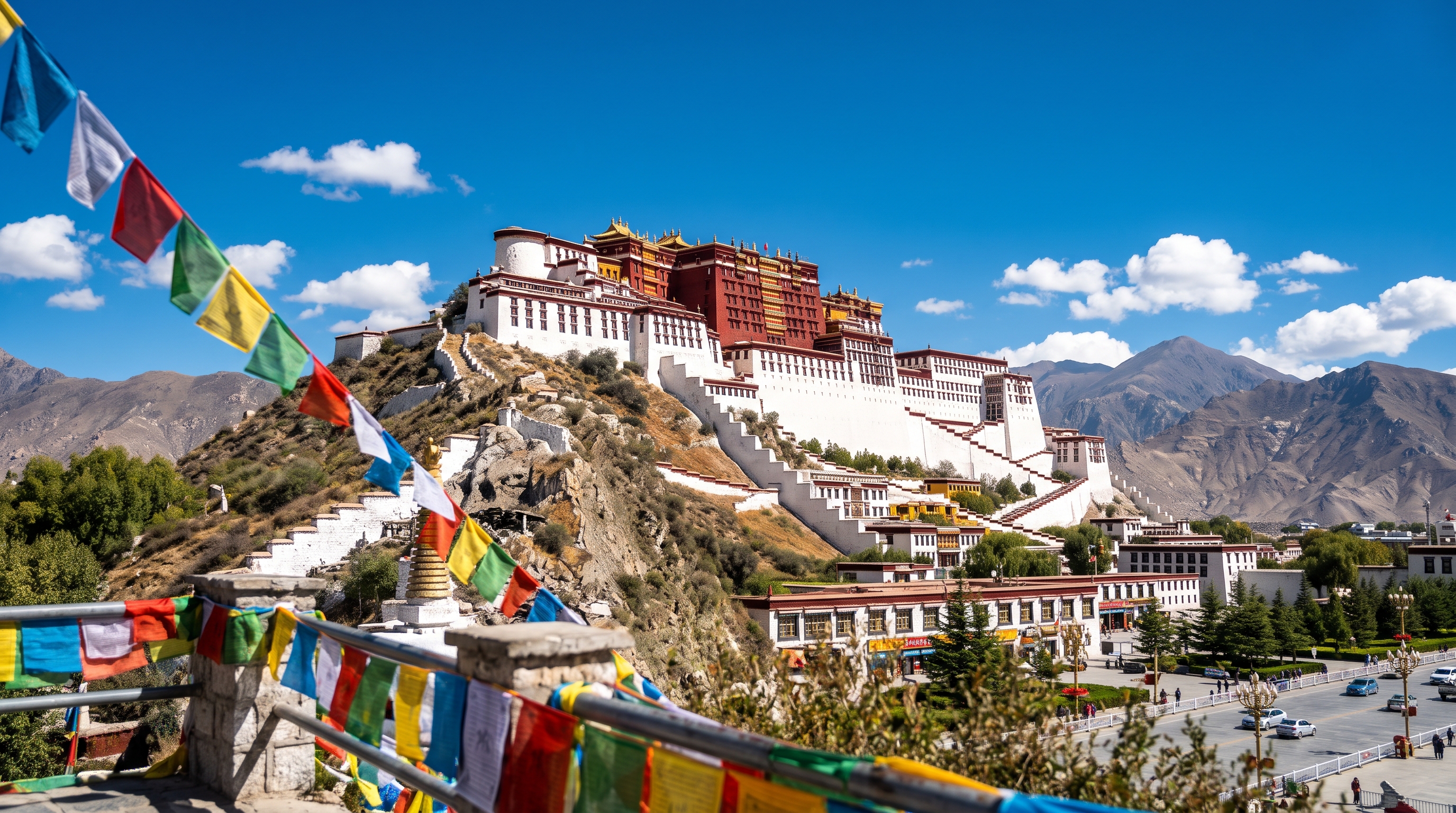
On countless people's pilgrimage lists,"scenery" is the golden roofs, red walls, and sacred lakes of the City of Sunlight, while "flavor" is the gentle, sweet aftertaste of butter and sweet tea on the snowy plateau. In this holy plateau city at an altitude of 3650 meters, what rises in layered ridges is not only the snow peaks of the Nyainqentanglha range, but also tier upon tier of flavor built from yak meat, highland barley, and Tibetan spices.
As a "dual-habitat walker" who has spent years decoding geography on foot and anchoring coordinates with the tip of the tongue, I have always believed:A Lhasa independent trip that does not discuss flavor has only completed physical asceticism; only by using the tongue to decipher the code of Tibetan cuisine can you truly enter the deep union of body and spirit in Tibet.
Lhasa is a typical "high-difficulty independent travel" destination; it tests not only your lung capacity but also your all-around itinerary skills. Today, the blogger applies no filters and breaks down for you a set ofincluding Potala Palace reservations, hardcore practical tips for border defense permits, and the ultimate Tibetan food ceiling experienceLhasa 24-hour ultimate dual-habitat route.
1. [Hardcore Travel Clearance Card]: A Guide to Avoiding Pitfalls on High-Difficulty Independent Travel
Before finding food and seeing scenery in Lhasa, you must first clear the following two hardcore thresholds; otherwise, you cannot even get through the "gate of Lhasa":
Potala Palace Ticket Reservation Tips:
Core Rules: Potala Palace tickets are officially reserved 7 days in advance on the WeChat mini program, with tickets released every morning at 08:30.
Insider Pitfall Avoidance: Be sure to reserveRoute One (main route),only then can you reach the core area of the Red Palace. During peak season (months 5-10), tickets are hard to get; if you cannot secure one, you can consider booking the "Line Two" route (which only visits the foot of the mountain and part of the core area), or go to the on-site booking window one day in advance to try your luck.
Hardcore Guide to Border Defense Permit Processing:
If this trip also includes the border lines of Mount Everest, Ngari, Medog, and Nyingchi with mountains and rivers, a border defense permit is a must.
Most Efficient Route: It is strongly recommended to apply for free at your place of household registration with your ID card, saving time and effort. If you have a travel agency in Lhasa handle it, it will not only take 1-2 working days, but also cost a service fee ranging from ¥50 to ¥100.
2. [Route Axis]: 24-hour "Holy City Scenery × Snow Region Flavors" dual-habitat route
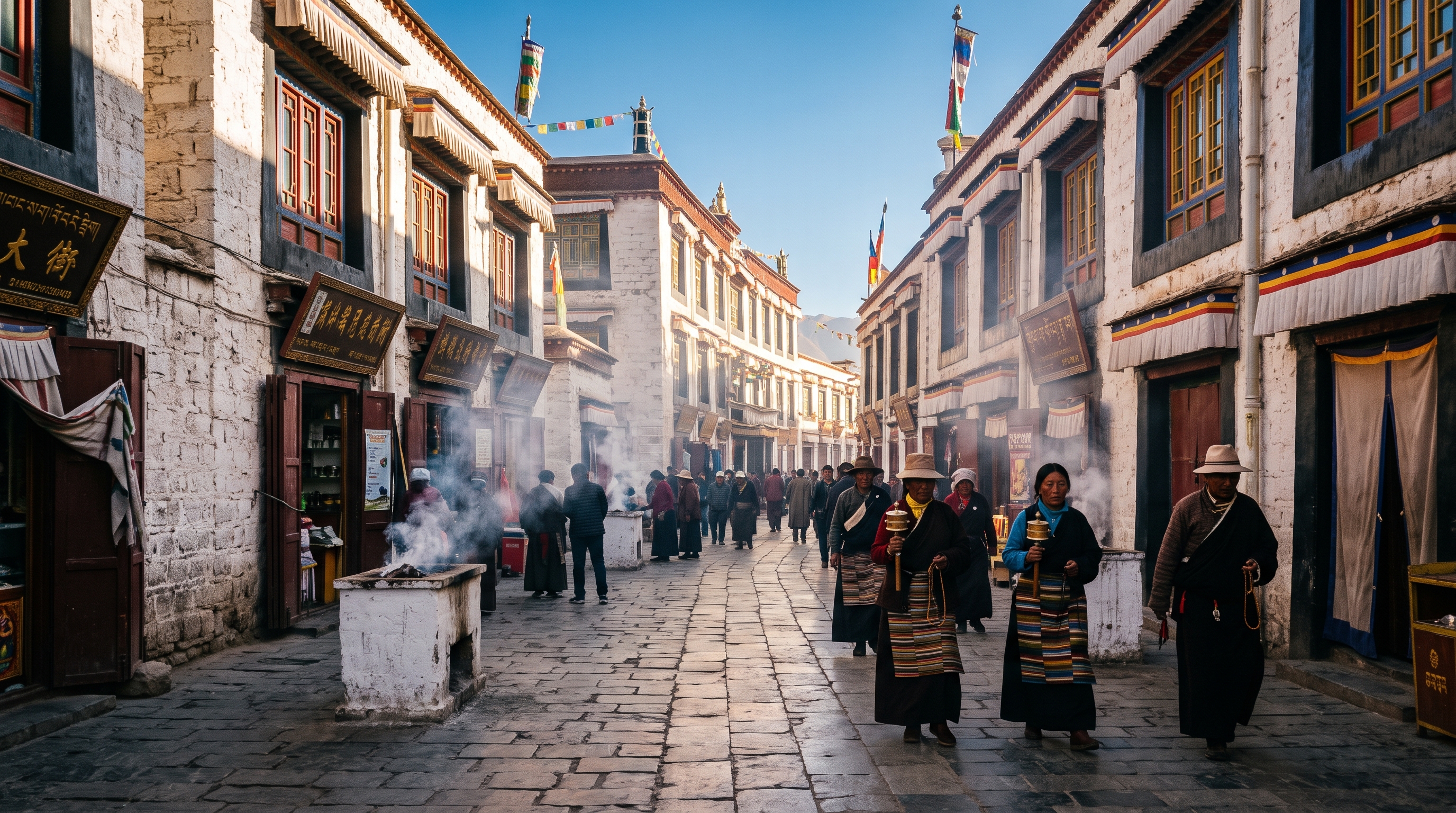
This is a route designed specifically for independent travelers to "control altitude, inhale oxygen, and cleanse the stomach." Listen to the bells of Jokhang Temple in the morning, climb Potala Palace for a bird's-eye view at noon, and slip into a Tibetan garden at night, spending every bit of your budget where it counts.
Time Slot | Spatial Coordinates (Location) | Scenery/Experience Highlights | Taste Coordinates (Recommended Categories) | Per Capita Budget |
|---|---|---|---|---|
07:30 - 09:30 | Chengguan District · Old Alleys of Barkhor Street | At first light, follow the steps of Tibetan compatriots and walk clockwise around the prayer wheels to experience the purest faith | Tibetan noodles + traditional sweet tea | ¥15 - ¥25 |
11:00 - 14:00 | Chengguan District · Potala Palace/Chakpori Hill | Climb to the top of Red Hill to overlook the whole city (with a pre-booked ticket), and take a photo at Chakpori Hill at the same spot as on the 50-yuan renminbi note | Authentic yak meat hot pot + cooked yak meat side dishes | ¥80 - ¥120 |
15:30 - 17:30 | Barkhor Street · street-facing Tibetan teahouse | Pick a window seat on the second floor and watch the sunlight fall in front of the Buddhist hall wreathed in incense smoke | Highland barley tsampa + butter tea | ¥20 - ¥35 |
18:30 - 21:00 | Around Cijuelin · Princess Wencheng Theater | Face the Potala Palace night view across the river and watch the stunning starry-sky live performance "Princess Wencheng" | Stone pot chicken + Tibetan-style fried spare ribs | ¥110 - ¥160 |
21:30 - 23:30 | Gongdelin / Xianzu Island Old Street | The modern neon of cyber Lhasa and Tibetan-style modern bistros that stay awake late into the night | Lhasa beer / homemade highland barley wine | ¥40 - ¥70 |
Holy City Scenery × Snowy Plateau Flavors Dual-Route Itinerary
Cycling / About 97 minutes by bike / 18.7 km
- 1Barkhor Street Pedestrian Street, Lhasa, Tibet Autonomous Region
Jokhang Temple, Yutuo Road
- 2Langse Tea House (Barkhor Street Pedestrian Street Branch, Lhasa, Tibet Autonomous Region)
Barkhor Street Pedestrian Street
- 3Princess Wencheng Theater
Sichuan-Tibet Highway (within the China Tibet Cultural Tourism Creative Park)
- 4Chakpori Hill Viewing Platform
No. 2 Norbulingka Road
- 5Gongdelin Tianjie
No. 47 Beijing Middle Road
3. [Core Dish Cards]: A Hardcore Deconstruction of the Three Main Stars of Tibetan Cuisine
Dish One: Traditional Tibetan Noodles (The Morning Duo Paired with Sweet Tea)
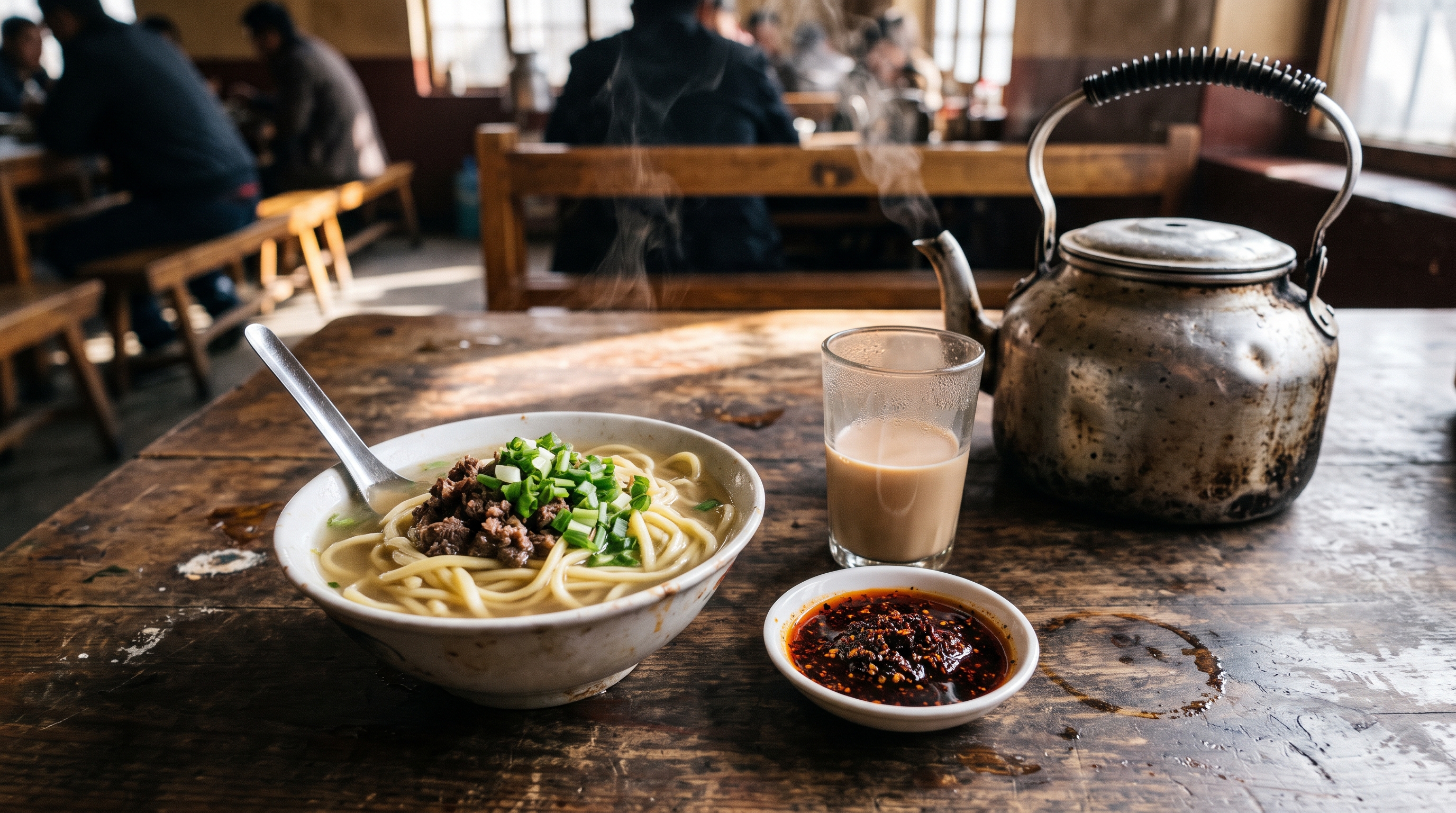
Origin Story: Tibetan noodles are the absolute soul of an early breakfast in Lhasa. They are not ordinary wheat noodles; they are pressed from highland alkaline water and wheat flour. Because of the low air pressure on the plateau, water boils at only just over 80 degrees, so during cooking the noodles are actually in a kind of "half-cooked" state. This unique texture was once dry rations used by horse caravans and camel trains entering Tibet to stave off hunger, and today it has evolved into the unshakable leading star of Lhasa teahouses.
Insider Ordering Code Words:
"One bowl of noodles, five pounds of tea": When ordering at an old teahouse, Tibetan noodles are served in small porcelain bowls, and sweet tea is ordered by the "pound"—this is the standard setup for old-time Lhasa locals.
"Add extra Tibetan chili": Tibetan-style chili is made with local red peppers and yak bone broth; it is fragrant but not spicy.
No-Mistakes Eating Guide: The hidden noodles are served, the broth is clear and the meat is minced.The correct way to eat it is: first, use a spoon to scoop up a mouthful of the original yak broth and drink it. That soup is made by simmering yak large bones over low heat overnight, and it is incomparably delicious. Next, pick up the yellowish alkaline noodles and chew them in large bites to experience their unique, slightly firm core.The final clearance password is: after finishing the noodles, immediately pour a cup of scalding hot sweet tea. The milky fragrance of the sweet tea mixes with the residual beef-bone broth and Tibetan chili in your mouth, producing an incredible creamy aroma on the tongue.
Dish Two: Pure Yak Hot Pot (with raw beef paste)
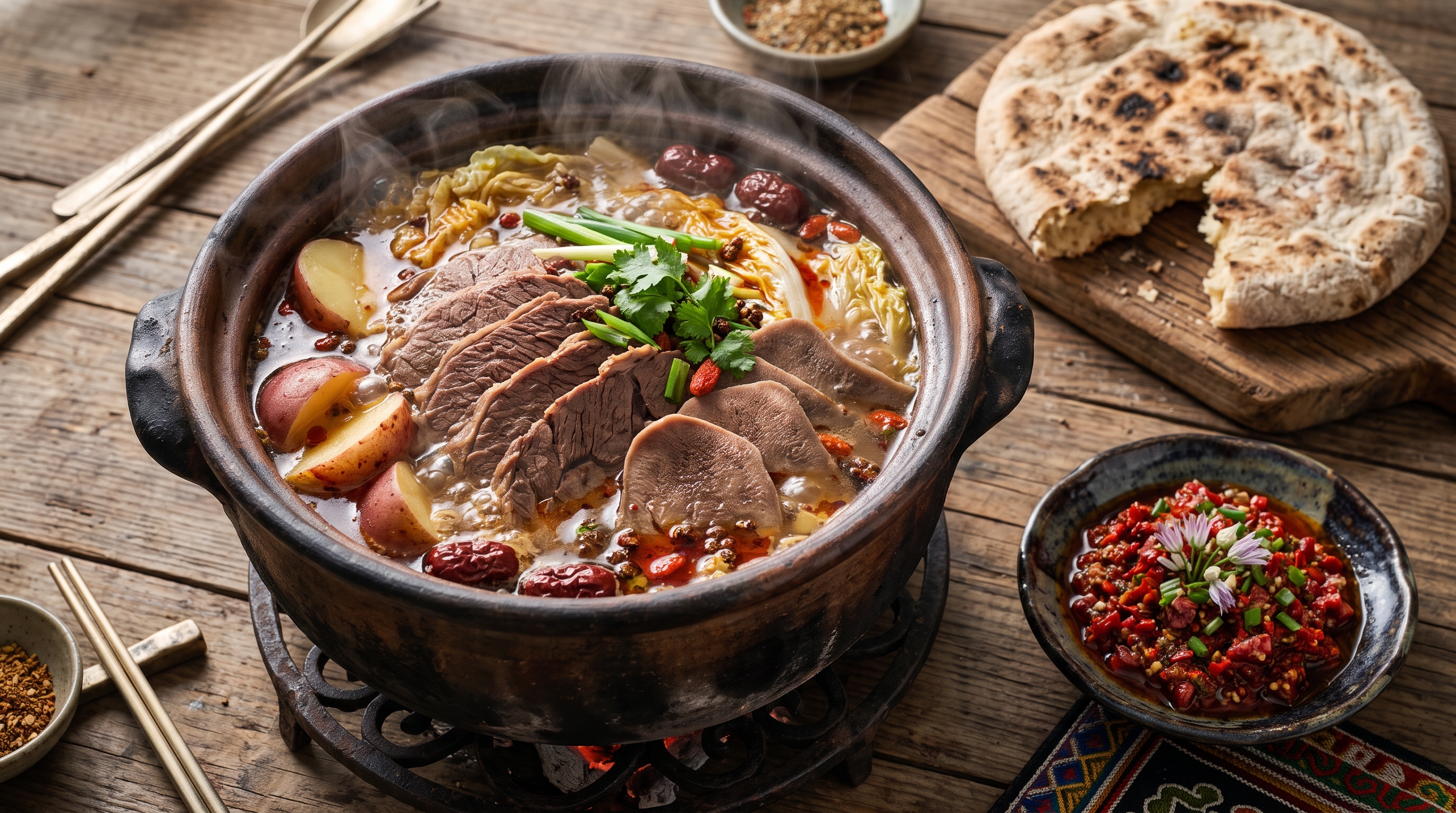
Origin Story: Yak is called the “boat of the plateau” and lives its entire life on unpolluted grasslands at an altitude of 4000 meters or above. When Tibetan ancestors grazed in the wild, because of the severe cold, they cut yak meat into large chunks and threw them into clay pots to stew plainly with wild scallions and salt. To supplement high calories, they would also mince the most tender hind leg meat, mix it with wild chive flowers and chili, and make raw beef paste; this is the most primitive and hardcore top-level feast of the snow region warriors.
Guide to Judging the Pot at a Glance:
Look at the "cookware": authentic Tibetan hot pot must use a traditionalclay potorcopper pot.
Look at the "layering of ingredients": an authentic hot pot must have Tibetan fragrant pork, yak tongue, and thick-cut yak beef chunks at the bottom, topped with highland red-skinned potatoes and Tibetan cabbage, stacked layer upon layer.
Top-scoring ordering answer: When eating yak beef hot pot, the oil dip only needsLocal garlic water, chive flowers, and a little salt. When the thick yak broth in the pot is bubbling, first fish out a chunk of yak beef with both fat and lean. Because of the high altitude, the meat is extremely firm, and its beefy aroma is several times that of ordinary beef. If "raw beef paste" appears on the menu, please treat it as a high-risk raw food choice: people with sensitive stomachs, pregnant women, the elderly, children, or those with weaker immunity are advised to avoid it; a safer way to eat is to choose cooked yak beef or fully heated hot pot ingredients.
Dish three: Highland barley tsampa and pure butter tea
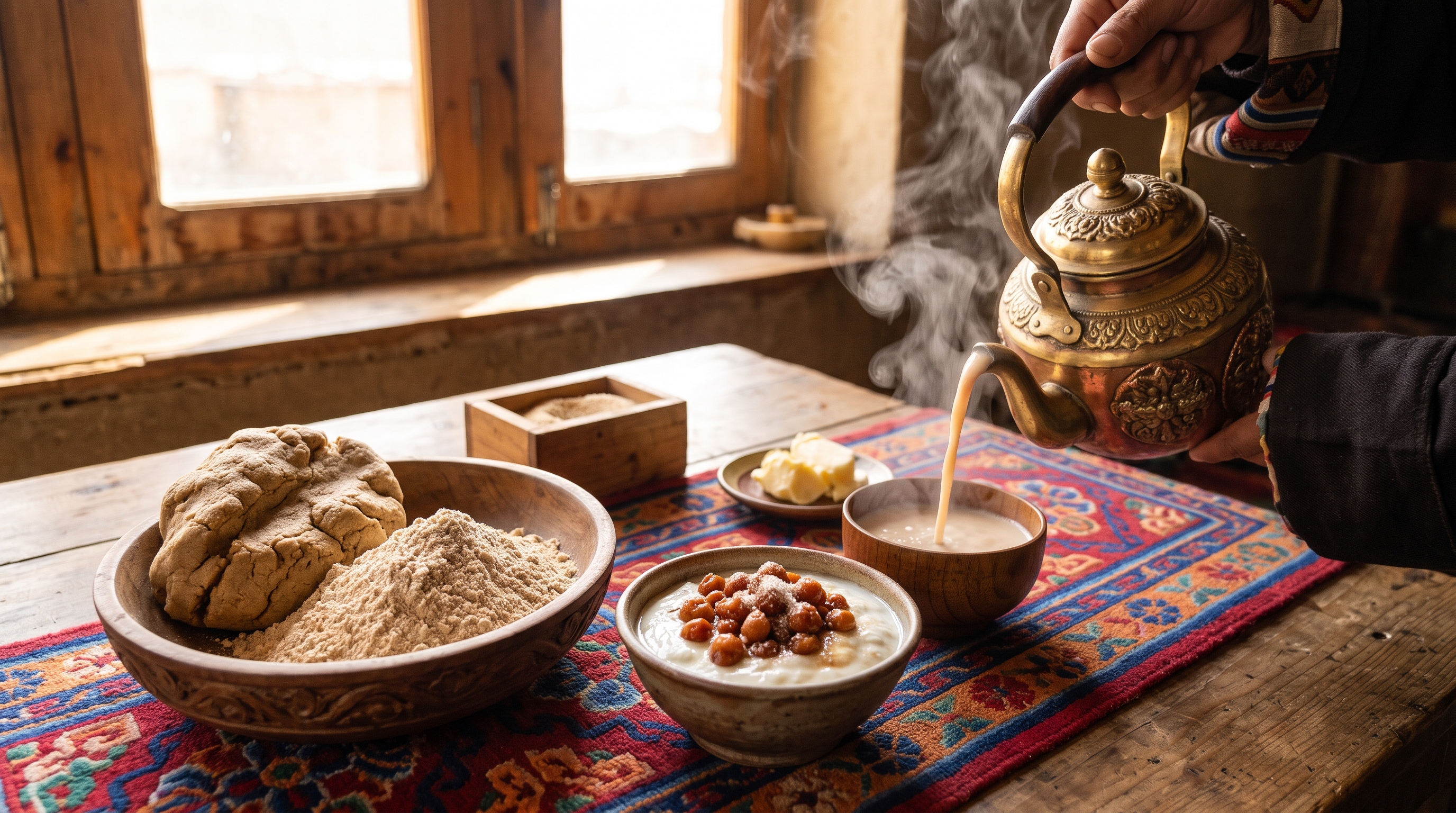
Origin story: Tsampa has been the staple food of Tibetan compatriots for over a thousand years. Highland barley is one of the few grains in the world that can grow in extreme cold high-altitude regions. Mountain villagers roast highland barley and grind it into fine flour. Butter is the fat extracted from yak milk. During long-distance migrations or kora, people carry a bag of highland barley flour and a flask of butter tea, and at any time and place knead it into balls in a wooden bowl with their hands to eat; this is the ancient nomadic people's survival code against the cold and low oxygen of nature.
How to knead it in the nine-grid style / hardcore step-by-step illustrated guide: In a Tibetan-style tea space, facing the platter of highland barley flour, butter, and white sugar brought to the table,absolutely do not stir it with chopsticks! You must learn the insider's "blind kneading" technique:
1. Pour in an appropriate amount of butter tea, just enough to cover the flour │ -> The tea liquid must be scalding hot, used to melt the butter 2. Bring the four fingers together and rotate clockwise in the bowl │ -> Gently "grab, pull, and press" the flour into the tea liquid 3. Once it feels sticky, knead it firmly into a ball │ -> Knead it into a pillow shape or round ball; this is tsampa
Pitfall reminder: If you are not used to the gamy smell of butter, you can order a plate of **"ginseng fruit yogurt tsampa"** as an improved version. The wheat aroma of highland barley, the slight sweetness of ginseng fruit, and the rich mellowness of yak yogurt interweave, making it an excellent high-altitude afternoon tea snack.
4. [Coordinate Matrix]: The Taste-Seeking and Tracking Map of the City of Sunlight
To seek out food in Lhasa, you must see through those "Tibetan-clothing photo-op check-in restaurants" that are opened specifically for tourists. Only by following the mothers spinning prayer wheels and the local young people can you find the most authentic flavor backbone of this city.
Alleys/Old Street Old Shops (what you eat is the original historical flavor)
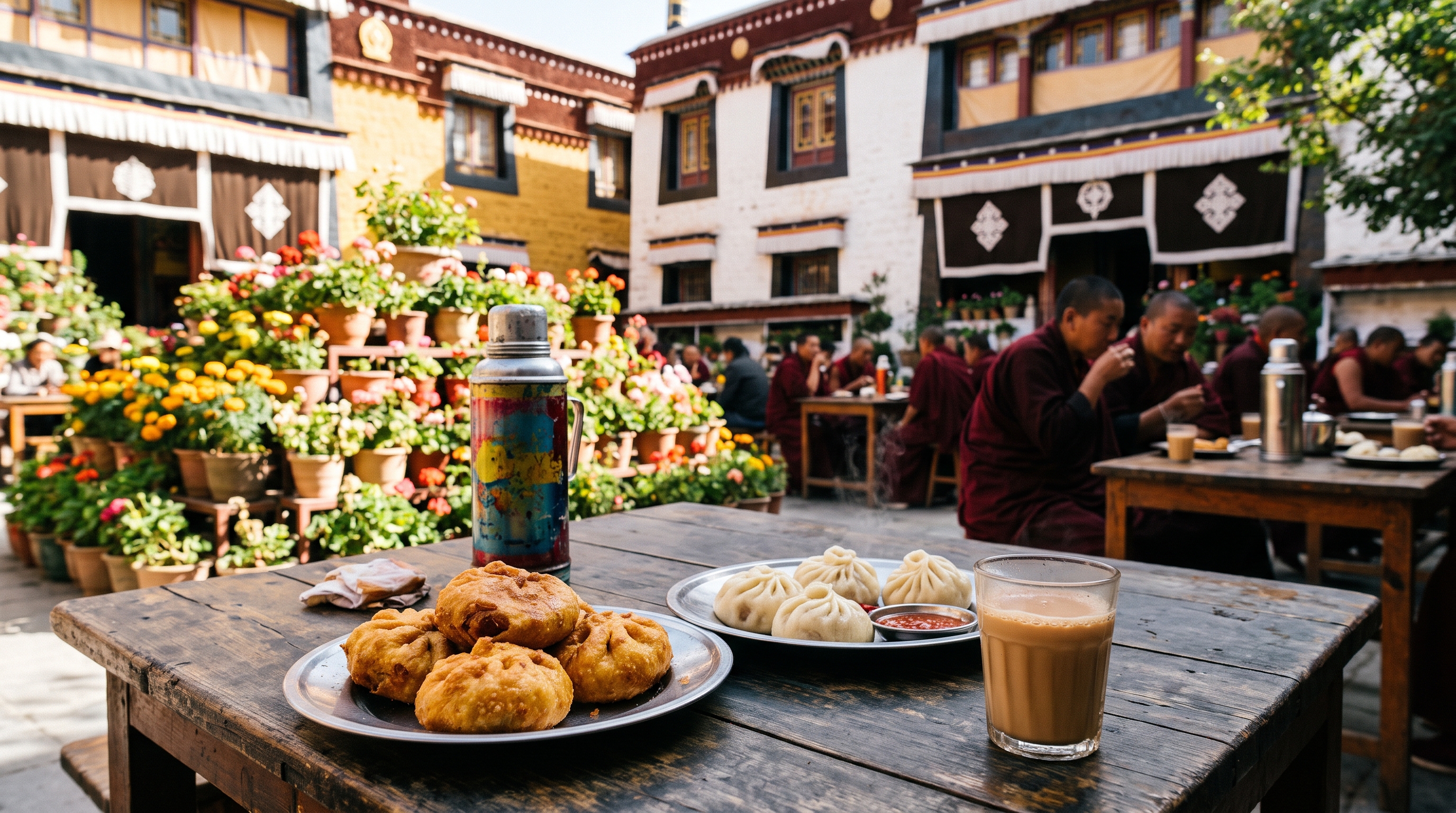
Guangming Gangqiong Sweet Tea House (in the alley beside the Jokhang Temple): The "Mount Tai and Big Dipper" of Lhasa's sweet tea houses. There is no menu here; for decades it has preserved the most ancient street-life atmosphere. You need to go to the disinfection cabinet yourself to get a glass cup, and place a few one-jiao or one-yuan banknotes on the table. The sister will move around carrying an aluminum kettle, fill a cup, and take ¥1 for herself. Here, theTibetan noodlesandfried potatoesmaintain the most authentic Lhasa prices; all around are local elderly people drinking tea and chatting, making it a living fossil of Lhasa life.
Canggusi Sweet Tea House (South Alley of Barkhor Street): This is a teahouse managed by nuns (Jomo). The environment here is quieter than Guangming Gangqiong, and all the teahouse's proceeds go to temple operations and charity. The sweet tea here has a finer, creamier milk flavor; the large steamed buns (with beef filling) have thin wrappers and are juicy. Sitting in the courtyard full of blooming flowers and drinking tea, you can experience the relaxation and serenity of a pure Buddhist place.
Danjielin Road Old Alley: Here are hidden Tibetan-style potato bun shops that only countless locals know about. Local red-skinned potatoes are boiled and mashed into puree, wrapped around minced yak beef, and deep-fried in oil until golden. At a few yuan each, it is Lhasa children's favorite go-to snack after school.
Night market/modern Tibetan-style food spots (what you eat is the late-night street food vibe of the cyber holy city)
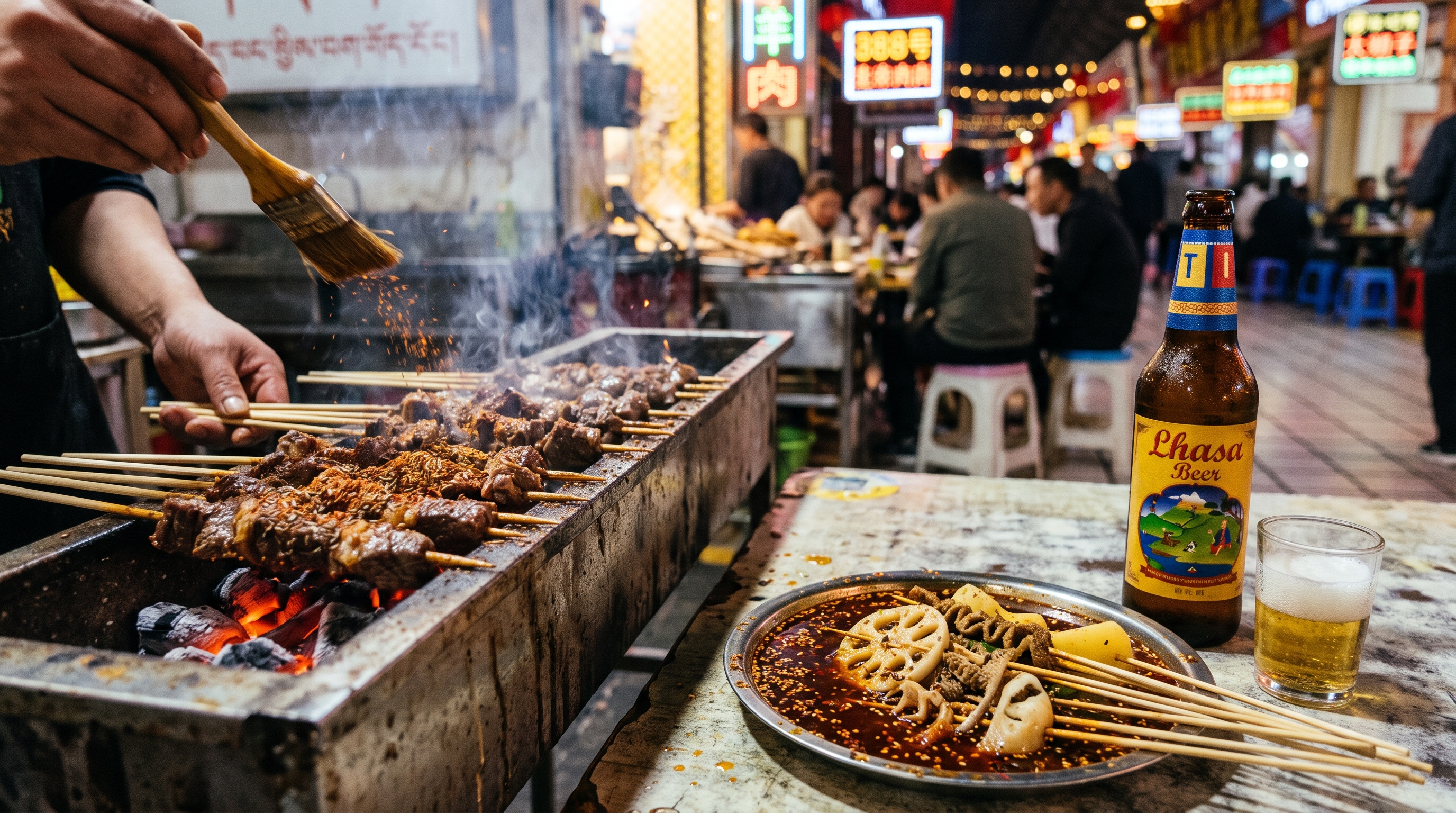
Tianhai Night Market/Northern Suburbs Food Belt: This is the liveliest sleepless place in Lhasa late at night. Here there is not only Tibetan food, but it is also the high-altitude competitive battleground of northwestern barbecue and Sichuan-style hot pot. At 11 p.m., the charcoal fire here is still blazing; you can order a skewer ofgrilled yak beef skewers, and a plate ofSichuan-style cold pot skewers, making it the most solid late-night energy supply station after altitude sickness eases.
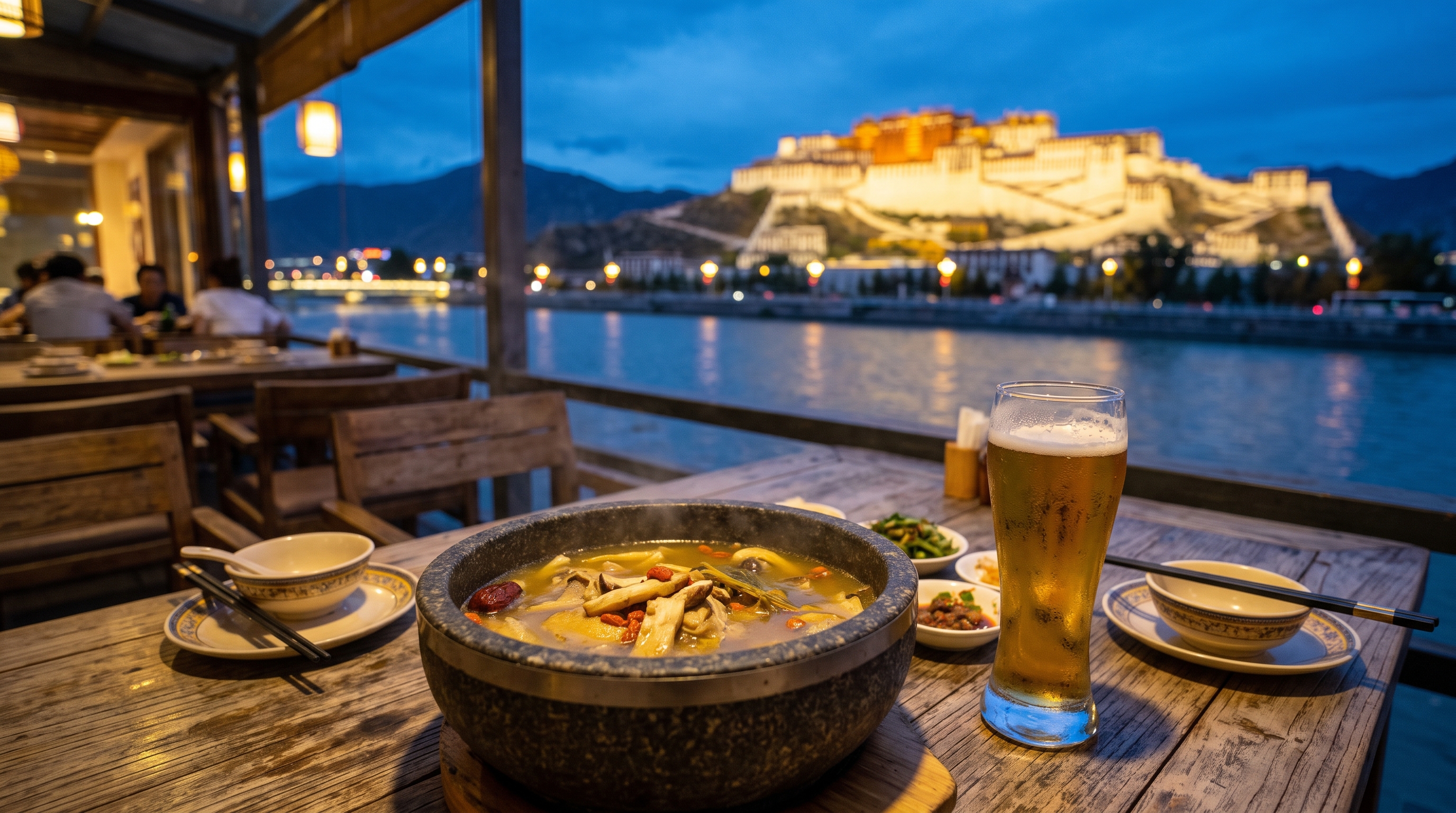
Princess Wencheng Theater Scenic Belt (Cijuelin Village): Located on the south bank of the Lhasa River. At night, when the lights of the grand theater come on, the Tibetan lingka and food stalls here come alive. You can sit on the terrace, eating steaming hotMedog stone pot chicken(cooked by tapping the stone pot by hand, the chicken has a special mineral-rich savory aroma), while watching the Potala Palace on the opposite bank looking like a floating golden castle under the night sky.
Xianzu Island/Gongdelin Community Extension Belt: This is the gathering place for Lhasa's younger generation and"Tibet drifters"artists. It is full of highly modern-aestheticTibetan-style craft beer barsand creative Tibetan restaurants. Here, you can order a glass of"Lhasa craft beer"brewed with local Tibetan saffron or highland barley, and listen to the resident singer on stage strumming and singing folk songs interweaving Tibetan and Chinese. In the gentle evening breeze of the Lhasa River outside the window, you will find that this highly challenging independent trip spanning thousands of miles has already found its most genuine fulfillment in this cup of sweet tea and the boundless night.
Article comments
Share your thoughts on “Lhasa "24"-Hour Food Guide”
Loading reviews…
Please wait